This is not the typical ChiChat essay. It is a biography. It is a biography of an American who led a life that is an example of a life that was average but exceptional; that was at once heroic and unique as each one of our lives is unique.
Al grew up on the streets of New York like a million other kids, a son of Russian immigrants Jews. They had fled the pogroms and the officially sanctioned anti-semitism and persecution of the regime of Czar Nicholas II. Al’s father had left his family at 15 never to see them again. He had been facing forced army service for ten years, which as a Jew, he would have not survived. His mother with her older sister fled after the Cossacks cut down their father in a raid on their village north of Odessa. It was in the Pale of Settlement, an area in western Russia to which the Jews were consigned. His father, after changing his unpronounceable Russian surname had made a modest success selling life insurance policies to his fellow Russian immigrants in New York for “the Metropolitan”. His father’s income enhanced by a portion of every premium of every policy he had sold, enabled him to marry and with his small family to move from the teeming Lower East Side to the more tony upper west side of Manhattan. This was where Alfred was born in 1899.
The date: 1899 had particular significance. That was the year the government in France finally released Alfred Dreyfus, a victim of institutional antisemitism in the French army.
Dreyfus had been convicted of treason, drummed out of the army in disgrace and sentenced to Devils Island for life in 1894; all based on a perjured testimony and forged documents. Dreyfus, a career army captain with an unblemished career assigned to the general staff, was accused of sharing secret documents with Germany, France’s bitter enemy since the humiliating defeat of 1870. He was from a loyal distinguished Jewish family from Alsace. Alsace had been a political football since Roman times. Louis XIII had taken the province from Bavaria in its last shift of administration and it was French until the Germans re-annexed it along with most of the province of Loraine in the peace treaty of 1871 ending the Franco-Prussian War. Alsatians speaking their own dialect were always viewed suspiciously by other Frenchmen and to believe Dreyfus, a Jew and an Alsatian with a German name, was a traitor had been easy in late 19th Century France.
The Dreyfus conviction was ultimately reversed with the help of novelist Emile Zola. The conviction gained world-wide attention and had been universally condemned as a blatant example of pervasive French antisemitism. Antisemitism had corrupted the French army and had become politicized. A political party had even been formed in France specifically to reverse the liberation of Jews effected by the French Revolution and Napoleonic reforms some hundred years earlier. The controversy had created Dreyfusards and Anti-dreyfusards which were roiling French politics. The actual traitor, protected by bigoted highs-ups, a colonel Esterhazy was identified but never convicted. Jewish newborn baby boys all over the world were being named Alfred in sympathy. To identify oneself as Jewish and yet be not particularly religious was not exceptional amongst Russian Jewish émigrés.
Little Alfred was also given the middle name of Dreyfus’ courageous attorney: Ferdinand Labori a survivor of an assassination plot himself. Labori was a name that was often misspelled and which Alfred was forever forced to explain. Alfred, called Freddy by his family and Al to his friends, like his family was totally irreligious. Like his father he was actually hostile to religious observance but paradoxically faced varying degrees of ant-semitism his entire life. He had difficulties getting admitted to college and quota systems prevented easy entrance to medical school. Antisemitic professors made graduate school difficult. When finally in medical practice he was able to obtain staff privileges only at a distant Catholic hospital miles away from his home Later in the Navy, he was forced to ask for re-assignment when his admittedly bigoted commanding officer demanded it. The equating of antisemitism wth patriotism, and Jews with disloyalty was an old story that never seemed to die..
Alfred grew up surrounded by the detritus and memories of the nineteenth century and the realities of the twentieth. The veterans of the Civil War were rapidly dying off along with their political power. Jim Crow and segregation were firmly established in the South. There were occasional serious race riots and lynchings were occurring at a sickening frequency. All presidents since Lincoln’s successor through McKinley had been officers in the Union Army. American exceptionalism was in the air with a recent victory over Spain, new possessions in the Pacific and Caribbean, the elevation of the expansionist Theodore Roosevelt to the presidency and with the start of the monumental Panama Canal. Roosevelt had brokered a peace between Russia and Japan in 1904 and won the Nobel Peace Prize. The humiliation of the Russians delighted Al’s father who hated the Czar, hoped for revolution in Russia. He backed Socialist Eugene Debbs here. He subscribed to the idea that society as a whole and particularly the inequities inherent in capitalism was responsible for human frailty and misbehavior. This was the cause of frequent family argument . Alfred never knew when he came home from school who might be lounging about the apartment. Frequently there were criminals on the lam using the place as a hideout enjoying his father’s hospitality and social views and his mother’s wonderful cooking.
On the street Alfred spent time doing odd jobs and protecting his feisty brother 7 years younger. He remembered being taken to the Battery to see the Great White Fleet steaming into New York harbor to take part in the Hudson-Fulton cerebration in 1909. The round-the-world tour of the US Navy’s warships was Roosevelt’s way to announce to the world that the United States was now a major power. Freddie remembered the infamous and tragic 1911 Triangle Shirtwaist fire in lower New York. This fire killed 146 sewing machine operators, mostly young Jewish girls. Many died of suffocation, other were impaled on the surrounding iron fence as they jumped from the 5th floor inferno. The exit doors had been inexplicably locked by the owners. Among other things, this was the event and subsequent litigation which launched the career of lawyer Al Smith future governor of New York and presidential candidate in 1928.
As a young adult, Alfred was forever seeking an active life away from the streets of New York. In 1916 he left home, went to Canada, lied about his age and volunteered for the British Army to serve in World War I. Al’s being sent to the Western Front was only prevented by his father who informed the authorities of his true age.
Alfred was 18 when he successfully enlisted here in the American Army but his drive for action was frustrated by the flu. The so-called Spanish influenza of 1918 afflicted millions world-wide and disabled thousands of American troops. It had a frighteningly high mortality rate. It killed more people than did the war, often in just a few hours. Al was hospitalized when his unit was sent to France. His slow recovery was complicated by “sleeping sickness” or viral encephalitis which in many cases led to Parkinson’s Disease. The specter of possible Parkinson’s Disease in his future would haunt Alfred for the rest of his life. .
After graduating college and medical school and internship in a city hospital, Alfred married. His fiancé, a talented artist, was from an old southern family. Extremely sensitive about and often embarrassed by his persisting strong Russian accent, Al’s father politely declined to travel to attend his son’s wedding, citing a mythical illness of his wife. The following year year was spent by Al in a medical fellowship at the famous Trudeau tuberculosis sanitarium in upper New York State. There, the American version of Thomas Mann’s Seven Storie Mountain was being played out: fresh air and sunshine and rest, the only treatment then available for TB. Patients coughing up bacillus laden sputum into ubiquitous sputum cups were bundled up and left out in virtually all weather, hopefully to gain recovery in that pre-antibiotic era. It was fortunate that both Alfred or his wife remained free of TB in spite of their exposure. Using inherited money the couple then spent 18 months in Europe as many American doctors did, doing post-graduate work. Al wrote a paper based on research in tuberculosis at the Vienna General Hospital: Allegmeiner Krankenhaus. So many American doctors were then in residence in Vienna at the time that the American Medical Association saw fit to to establish a branch there. Living was cheap in Austria and with friends Al and his wife were able to hike in the Alps in the summer and ski in the winter.
Visiting Berlin, Al and his wife witnessed demonstrations and street riots led by the rising Nazi Party. Like most American and foreign observers at the time, they thought little of their significance. They could not take the violent antisemitic ravings of Hitler very seriously in 1931 and like most Jews in Germany at the time, thought that in the country of Goethe and Schiller and Beethoven, Jews were safe and secure.
Alfred and his wife Evelyn had their first child in Vienna and a few months later sailed back to New York leaving Europe and its tensions behind. At what turned out to be the worst possible time, at the depth of the Great Depression, Alfred opened a suburban New York general practice medical office. He borrowed money to do it. The family needed it. Nine months went by before he had his first patient! His office was part of his house where he saw patients six days a week. He was able to obtain no local hospital appointment and for a time he worked at night as a part-time hospital house physician. Though money remained scarce, over time Alfred’s general practice slowly built up. His was the only one in the neighborhood. Family dinners were often attended by grateful strangers, starving artists and others unable to find work. Al was able to buy a car periodically to make house calls but never a new car and never a car built by the notorious antisemite, Henry Ford. He was also able to take short family vacations, take up what for the time were somewhat off-beat activities: skiing, hiking, camping. Alfred’s practice was in a primarily Irish Catholic community and was typical then for a 1930’s generalist. He delivered babies. He treated children with colds, watched old people die of pneumonia and cancer, and gave digitalis for heart disease. He was an effective physician for the time and as kind of an outsider he was relied upon for his discretion. Priests trusted him to treat venereal disease and Nuns could be referred for safe abortions. By our standards, charges were modest. Drop-in office visits were charged $2 and house calls $4. Many patients could pay nothing and charges were often satisfied in kind: food, carpentry, plumbing and the like. At Christmas Al made a point to give gifts to his favorite, i.e. paying patients. He would drive by each house and his son would deliver a wrapped bottle of whiskey with his father’s greetings. Al loved medicine and was devoted to his patients. His patients were loyal and they loved him.
As the thirties progressed, his son and daughter grew taller but at the same time, the situation in Europe grew dire. Pathetic requests came from desperate Jews in Germany. An affidavit was needed to guarantee financial support to permit emigration to the US. Could he please supply one? With precarious finances, this was not often possible. That the Holocaust was in their future could not be imagined.
After the shock of Pearl Harbor, Alfred became progressively discouraged as one American defeat followed another. The apparent destruction of our Pacific Fleet on December 7 and successive losses of our carriers in subsequent actions in the South Pacific the possibility of a United States defeat pushed Al to get involved. Though over age, he he wanted to volunteer where he could be most useful. Just as his practice had begun to be successful with so many other physicians in the service, with his wife objecting, his mind was made up. Al accepted a commission in the Medical Corps of the United States Navy.
Alfred was initially stationed at a large local naval hospital but it was too removed from the action. He requested an action station and he got it. At age 44 he shipped out for the Pacific. He said goodbye to his aging parents, wife and children. The last they saw of him was when he left Grand Central Station on the 20th Century Limited heading west. He ran into a lifelong friend by accident in Honolulu there they shared food he loved best. They had a Chinese meal together.
In a few weeks Al was a ship’s surgeon on a ship participating in the invasion of Iwo Jima as part of the island- hopping campaign of General MacArthur. His ship was assigned to carry troops in and to take the wounded out. He wrote home about witnessing the attack from shipboard. His excitement was palpable. He described the tremendous number of wounded and the serious difficulties and his exhaustion in caring for them under conditions. No one could be fully prepared for the number of serious and extensive burns and blast injuries. There was a chronic shortage of medicines and equipment in the attacking forces. They were under continued assault by defending and progressively desperate Japanese. Then in April 1945 with Marines on board, his ship was off shore where the Marines disembarked onto the beaches of Okinawa. There they took on wounded while under constant attack by Kamikaze suicide planes, a relatively new phenomenon. Without any effective defense against what were the ultimate in lethal guided missiles, at Okinawa the Navy suffered the loss of more men and ships than at any other time in its history. Some fifty ships were lost and 14,500 Americans died. 77,000 Japanese soldiers and approximately 100,000 civilians were dead when the island was ultimately taken. The fanaticism and willingness to sacrifice on the part of both the military and civilian population convinced Allied planners to do anything to avoid invasion of the Japanese home islands. It was estimated that 1 million Allied casualties could be anticipated. Forcing quick Japanese capitulation was imperative. This was the rationale for the atomic bombing of Hiroshima and Nagasaki.
Al had just finished his shift in the operating room when a Kamikaze crashed into his ship turning it into a blazing inferno. Nearby vessels sent assistance saving the ship and taking off survivors but too late for him. Along with 30 others, Al died at age 45.
After Al’s death, his father soon had a fatal stroke. His mother died 10 years later with enduring depression. Evelyn his widow with inadequate benefits, went to work and raised her son and daughter by herself. She ultimately remarried this time unhappily, and was widowed again. She died of natural causes just short of her 90th birthday. Her ashes were interred next Al’s in a military cemetery in a grave under a small white grave stone among thousands of others just like it. Al never saw his children grow up; his daughter happily married, his son build a career, or enjoy his grandchildren. His life was one he wanted to lead, as a physician and a man. It was unique and like each of ours is unique and yet it was ordinary. Like millions of others it was just another example of a successful American life. He wanted nothing from his country except to be able to live his life as he wanted and he gave his life so that he and others like him could do it. He was a man who loved life and his family but he loved his country more.
The presidential citation signed by Harry Truman which accompanied Alfred’s Purple Heart decoration was typical: his middle name was misspelled.
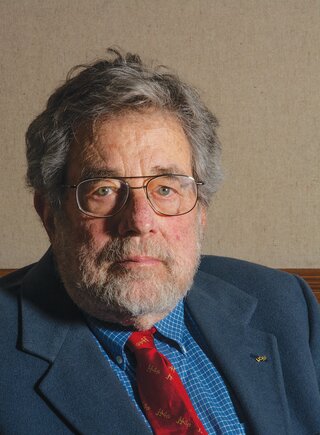
Alfred Labori Lyons was my father.
© 2016 Arthur Lyons, M.D. All rights reserved.