
“War, A More Fatal Disease than Cholera, Typhoid Fever and the Rest Put Together“[1]
The first word, which was deliberately left out of the announcement, sets the tone for my paper. Tonight I would like to share with you the results of my limited research into the origins and consequences of the War of the Triple Alliance. A war that South American historians consider to be the most calamitous in their history and yet one that is little known outside of South America. Marshal-President Lopez pursuing his quixotic goal of becoming the Napoleon of South America plunged Paraguay into war on November 12, 1864. It did not end until his death on March 1, 1870. During this time landlocked Paraguay fought alone in a bloody struggle against the two most powerful states in South America, Brazil and Argentina, as well as Uruguay.
It was during my research for an earlier paper on Richard Burton that I came across this tragedy. Burton had visited many of the major battlefields and had written a book about his experiences. In describing the war he said: “Seldom has aught more impressive been presented to the gaze of the world than this tragedy; this unflinching struggle maintained for so long a period against overwhelming odds * * *.” Others thought it a “prophetic picture” with its “trench warfare” and a “Hindenberg Line.” One author felt it was the real “war to end wars.” While numbers fail to paint fully the despair and horror, they of themselves are staggering. More than one half of the country’s population were casualties. The war ended with just a quarter of a million Paraguayans left and of those, only 28,000 were adult males. The ferocity of the war may also be measured by the casualties suffered by the Allies. Both sides lost over 350,000 people in the War, which was more than double the population of Buenos Aires at the beginning of the war and about equal to the total population of Rio de Janeiro and Uruguay at the same time.
Here in miniature — as if in laboratory conditions because of its remoteness and obscurity — were all of the contradictions and ambiguities, all of the vanities, ambitions and obsessions, all of the cravings for power and the paranoid preoccupation with security, prestige and face-saving, all of the valor and all of the duplicity, all of the courage, endurance and sacrifice made in the face of inevitable results. In sum, all of the makings of war. Similar experiences led a contemporary in time, General William Tecumseh Sherman, to say before the graduating class of Michigan Military Academy on June 19, 1875:
“I am tired and sick of war. The glory is all moonshine. It is only those who have neither fired a shot nor heard the shriek and groan of the wounded who cry aloud for blood, more vengeance, more desolation. War is hell.”
At war’s end, Paraguay was occupied by the Allies, looted of almost everything of value, all but annihilated, bled virtually white by the struggle.
When I first read of this grim obscure war in an obscure part of the world, I wondered under what circumstances and by what kind of people could such sustained losses be endured. How and why could they continue their impossible fight against overpowering odds? What happened to the people who suffered such a defeat, and to those who won such a costly war? It is these questions that I address tonight and put before you for your consideration and comments.
Landlocked Paraguay, divided by the Paraguay River, was bordered by Argentina to the west and south, by Brazil to the east, and by Bolivia to the north. Visitors to Paraguay in the middle of the 19th Century often commented on the Garden of Eden quality, its out-of-time nature. To understand the country, we must go back to the origin, because there were seeds planted there which may explain the nature of the Paraguayans. Because their nature is not just explained by their geographical isolation, the reliance for an outlet to the sea on a river which runs for most of its length through foreign countries, or even their position between the two most powerful countries in South America who were natural adversaries. To be sure, the fact that they were a frontier people is important, that they were forced to be self-reliant and to accept adversity and severe hardship was a common experience. They did have the threat of marauding Indians and the continual pressure from ambitious neighbors who coveted much of their land.
One very important factor was that Paraguay, unlike most other countries in South America, retained its indigenous culture to the extent that their language was the dominant language. Guarani, not Spanish, was the language of the people. It is still the language used by the mass of the people. Newspapers and books are published in Guarani. While there was a sprinkling of Spanish ruling class, the Guaranis, the most numerous of the local Indians, had a far greater influence than Indians in other countries. Indeed, the Manchester Guardian in an article in April 14, 1870, said of the war that it “made a profounder impression on the minds of competent observers than almost any other conflict.”
“It has destroyed a remarkable system of government. It has overturned the only South American state wherein the native Indian race showed any present likelihood of attaining or recovering such strength and organization as to fit it for the task of government. No other state in South America has been able to boast of so much internal peace.”
The article went on to suggest that had the Paraguayans been “somewhat more numerous, though even by only a few thousands,” it was likely that Lopez would have won the war, and Paraguay might have been to modern South America what the Incan dominion made of Peru prior to the Spanish conquest.
None of these, however, is the full explanation. We must go back further in time to the days of the Jesuit Kingdom. At the turn of the Seventeenth Centure, the Father General of the Jesuit Order, Claudius Aquavia, received royal approval of the formation of a Jesuit province for an area far greater than that of modern Paraguay. There were eventually 30 reducciones — or reductions or missions — only 8 of which fell within the boundaries of Paraguay today. The missions received a baptism of fire almost immediately. They were attacked by people descended from the union of the original Portuguese and Dutch settlers with their Indian and Negro slaves, people known as Mamelucos, who were located at Sao Paulo, Brazil, nearly 800 miles away. Because of the Dutch control of the seas off South America, they were cut off from their supplies of slaves from Africa and went into the interior to get them. Because of their lack of arms, the Jesuits fell back after the first attack and with the Indians commenced a most remarkable exodus. They plunged deeper and deeper into the interior. Of the 10,000 who started, only half survived. A brief respite was enjoyed. Further raids then drove the Jesuits deeper until they reached the “promised land” between the rivers Uruguay and Parana. When the third invasion struck, the Jesuits had armed the Indians and the attackers were routed. The latest attack was at the time of the 1640 revolution in Portugal so the union of the Spanish and Portuguese crowns was destroyed, and that reduced the threat of future raids.
There was nothing unique about the idea of the Jesuit missions, but what was remarkable was the thoroughness and efficiency with which it was carried out.
The Jesuit System was nothing if not orderly. The towns and villages, which ranged in population from about twelve hundred to about eight thousand, were all built on the same plan.
There was a large central square of grass, on which sheep were pastured in order to keep it short. On three sides of this square were the dwellings of the Indians — long, low pent-houses, made of wattled canes or sundried bricks, accommodating a hundred families or more, divided into separate apartments by lath-and-plaster walls, but all under the same roof and with a communal verandah or with a wide portico forming a covered walk.
The fourth side of the square was taken up by a towered church; to the right of it the house of the Jesuits (they usually worked in pairs, and even in the largest of the mission towns there were seldom more than three) and the public work-shops, each enclosed in a quadrangle; to the left, a walled cemetery and a house for widows, also enclosed in a quadrangle; and behind all these, a large garden.
The life lived in the reductions was every bit as orderly as their design. As Robert Southey says in his History of Brazil, “An Indian of the Reductions never knew, during his whole progress from the cradle to the grave, what it was to take thought for the morrow: all his duties were comprised in obedience. The strictest discipline soon becomes tolerable when it is certain and immutable * * * that of the Jesuits extended to everything, but it was neither capricious nor oppressive.” And Cunninghame-Graham, another historian, has given us this vivid picture of a typical day in the life of the reductions:
“* * * the Jesuits marshalled their neophytes to the sound of music, and in procession to the fields, with a saint borne high aloft, the community each day at sunrise took its way. Along the path, at stated intervals, were shrines of saints, and before each of them they prayed, and between each shrine sang hymns. As the procession advanced, it became gradually smaller as groups of Indians dropped off to work the various fields, and finally the priest and acolyte with the musicians returned alone. At midday, before eating, they all united and sang hymns, and then, after their meal and siesta, returned to work till sundown, when the procession again reformed, and the labourers, singing, returned to their abodes * * *. But even then the hymnal day was not concluded, for after a brief rest they all repaired to church to sing the ‘rosary’, and then to sup and bed.”
Cunninghame-Graham called it a “perpetual Sunday School.”
In the everyday life of the communities, there were also a number of Indian officers — carefully selected and supervised by the Jesuits. The Indian caciques, for example, held commands in the armed militia — though with soldier-priests at their sides. These chiefs, incidentally, received preferential treatment in other ways; they had their own Indian guards and servants, and they received better food than the rest. The police officers were also Indians chosen by the Jesuits, and the missions had their own jails.
The economy of the reductions was a kind of primitive communism.
For nearly two hundred years, in fact, whatever their failings and however mistaken their good intentions may have been, the Jesuits were the protectors of their Indians from the worst of the physical ills that assailed those outside. In treating their charges like children they may have been, as happens so often in parent-child relationships, too confident in believing that they alone knew what was best for their welfare; but if they were stern fathers they were seldom cruel ones.
In 1706-7 the last two of the thirty townships which constituted the “Jesuit State” were established; bringing the total population to about 100,000, a considerable figure by the standards of the day.
But by now the tide was beginning to run against the Jesuits throughout Europe. The Marquis of Pombal, virtual ruler of Portugal, had banished the Order from the homeland and from Brazil in 1759, and Louis XV expelled them from France in 1764. After protracted intrigues, inquiries and deliberations in Madrid, the end suddenly came, too, for the Jesuits in Spain and the whole of her overseas empire, when on February 27,1767, Charles III issued a decree of expulsion and confiscation.
The consequences of the Jesuit rule were profound upon the development of the Guaranis. Colonel George Thompson, an Englishman who received a commission in the Paraguayan Army of Marshal-President Lopez, believed that it was the Jesuits who brought them “to a more than military state of discipline and obedience, under which they gradually abdicated reason and thought.”
They also had a conservatism and suspicion of foreigners, which Burton suggested was reminiscent of China and Japan. They had a long history of political and economic isolations.
In 1776 Paraguay and Uruguay were incorporated into the Vice-Royalty of Rio de la Plata and learned to distrust the inhabitants of the Port of Buenos Aires who dominated it. After the war against Spain in which the Governor of Paraguay pledged to fight for the Spanish Crown and was defeated, Paraguay entered into an armistice with the rulers of Buenos Aires and then began the long struggle for independence which finally was won by Dr. Jose Gasper Rodriguez Francia, a scholar and defender of the rights of the Guaranis, who made him an object of reverence and awe. A junta was formed in Asuncion, the capital of Paraguay, to run the country. Francia was a member but resigned because he felt joint ruler was never effective. He ultimately returned, after a self-imposed exile with the public increasingly demanding his participation in government. Armed with greater power he took over the government. In 1813, he refused to send deputies to the Constituent Assembly in Buenos Aires, annulled the Treaty of 1811 and proclaimed the absolute independence of the Republic of Paraguay. In 1814 he was made a Dictator for five years, and in 1816 was elected at age 60, Perpetual Dictator with the title “El Supremo.” He ruled for 24 years.
Burton said of him that he was one of the few capable of guiding a revolution to its logical end.
“Dr. Francia has usually been presented to English readers as one of the monsters of history * * *.”
Some at least of the denigration of Francia springs from an inability, within the nineteenth-century context, to understand what exactly he was at. That he was guilty of many acts of terror is not to be denied. His power was as absolute as that of any Roman emperor or eastern potentate, subject to the same temptations, and attended by the same whims and vagaries. He would not brook contradiction or disobedience, and those who attempted them were thrown into jail and loaded with fetters. As time went by, he became increasingly touchy, and subject to fits of unreasoning rage. He ordered that everyone should wear a hat of some sort – if need be only a brim, he declared with grim humour – so that it could be doffed in his presence; and those who failed to do so with sufficient promptitude or respect likewise found themselves in his dungeons. If, when he was out riding, passers-by failed to get out of the way quickly enough, his guards would lay about them with the flats of their swords. Eventually, people were so terrified that they kept out of the way when he was abroad, and he rode through deserted streets, dressed in black, his head sunk on his breast in gloomy contemplation. He frequently ordered floggings and other tortures for insignificant misdemeanours, and he made a habit of witnessing them himself. He had, too, the fantastic largely paranoid attention to detail of the typical despot. As Richard Burton tells us:
“He knew exactly the cost of hoe or axe, and he used to count and measure the needles and thread necessary for a uniform.”
He particularly terrorized the Spanish and the Upper Class Creoles, and they became victims of a reign of terror. There is no real evidence that there was ever any widespread popular resistance to any of Paraguay’s dictators. Indeed, Burton argues, in connection with the Paraguayan’s loyalty to Francisco Solano Lopez during the war that “the logic of facts” proves that
“the people were enthusiastic both for the system and its administration * * *. They were doubtless, and they still are, in a state of semi-barbarism, but they have given their lives rather than abandon the customs of their ancestors and betray what must be called their political creed.”
As a result of Dr. Francia’s economic measures, the growth of an independent trading and commercial middle class was prevented, and a fascinating social evolution begun in that land that had already witnessed the rise and progress of the Jesuit missions in which there was communal ownership of property.
Burton described Francia’s Paraguay as “a reproduction, in somewhat a sterner mould, of the Jesuit Reduction system,” which succeeded, he adds, “because the popular mind was prepared for it.”
But Burton was one of the few nineteenth-century commentators on Paraguay capable of thinking in genuinely historical terms, and it was he who saw that the War of the Triple Alliance itself belonged to the same process: “It is the Nemesis of Faith; the death-throe of a policy bequeathed by Jesuitism to South America.”
By an extension of Dr. Francia’s policy of exclusiveness, foreigners were, therefore, now prohibited from entering the country, and those already domiciled forbidden to leave.
Diplomatic relations with foreign powers were practically brought to an end.
He stayed aloof from the War in 1827 between Brazil and Argentina.
After Francia’s death in 1840, people still took off their hats and glanced anxiously about them at the mention of his name.
One scholar said of him:
“He proclaimed the independence of Paraguay of Spain and preserved it against her neighbors by isolation and despotism, two terrible means that necessity imposed upon him in the service of a good end.”
His successor, Carlos Antonio Lopez, raised Paraguay to a level of prosperity it had never reached before. He liked to be called El Ciudadano, “The Citizen.”
His rousing slogan was “Independence or Death.” As dictators go — and they ultimately seem to go — he was a reasonably benevolent and enlightened one, although he had a few acts of capricious tyranny. He abolished slavery in 1842, twenty years in advance of the United States and 46 of Brazil. He built schools, roads, docks along the river system, and a cathedral and started a telegraph line. He withstood the pressures and temptations to engage in real war with Brazil.
But his most lasting legacy was his son, Francisco Solano Lopez, born on July 24, 1826. He received the best education possible. He spoke French, German and Portuguese and a smattering of English. He considered himself to be the greatest of military men. At age 27, he set out for Europe, the first Paraguayan of any importance to do so.
While in Europe he fell under the spell of the legend of Napoleon and met Elisa Alicia Lynch, who some considered to have played the part of Lady Macbeth in the tragedy. Only 19 at the time she met Lopez, hers had been a tragic life, losing her family and being forced to live on her wit and beauty. She educated Lopez in the way of the salon and got him to discard his gaudy uniforms and be tailored by the finest houses in Paris. After observing many military reviews, Lopez returned to Paraguay with his new mistress. Madame Lynch was snubbed by the society of Paraguay to their ultimate regret.
During this period there were great disputes and battles between the provinces and Buenos Aires for the domination of the Argentine Federation. Carlos Antonio Lopez died in the fall of 1862 during these disputes, and his son became his successor, although not without some skillful meaneuvering. As the head of Paraguay he sat between two states who were fast qualifying for the rank of great powers.
The trouble started in Uruguay. That country was split between a number of political parties, the principal ones being the Blancos and the Colorados. They fought and civil war broke out. Both Brazil and Argentina supported the rebels (the Colorados), and the Blancos then in power sought aid from Paraguay.
Lopez increased his army, intensified military training, attempted to get arms from Europe and augment his navy. Lopez warned Brazil against military intervention in Uruguay. The warning was not heeded, and Brazilian forces invaded Uruguay in October 1864. Instead of aiding Uruguay, Lopez siezed Brazilian ports in Mato Grosso in November of 1864. Paraguay was denied permission to cross Argentina, but did so in any event and attacked Brazil. The invasion across Argentina territory brought Argentina into the war, and the victorious rebels in Uruguay then joined the Triple Alliance in May of 1865. Lopez’s battle cry was “Conquer or Die.”
Time does not permit any details about the war. It had its early successes, then eventual retreat and withdrawal into Paraguay. Brilliant forays almost succeeded, and had they done so may have carried the day. For example, lacking a navy to fight the Brazilian navy forces, Lopez put nine cannon on rafts pulled by small boats, with the aim of placing them in the cover of night to destroy the sitting Brazilian fleet. It almost succeeded, only failing because of an untimely discovery. All were afraid to move against Lopez. Finally the fortress on the Paraguay River, Humaita, fell in 1868.
In battle after battle the Paraguayans demonstrated incredible courage even in the face of devastating losses. The then American Minister, McMahon, a veteran of the Civil War, was appalled:
“I regret to say that more than one half of the Paraguayan Army is composed of children from ten to fourteen years of age. * * * These little ones in most cases absolutely naked [after one battle] they came crawling back in great numbers, mangled in every conceivable way. There seemed to be no place for them to go and they wandered helpless towards the headquarters without tear or groan.”
Thousands of women were observed by McMahon to move artillery, drag the ammunition wagons, and bring in the wounded. They were vastly outnumbered by the Allies, who had far superior weapons.
The capital was then occupied by the Allies in January of 1869, and yet the war dragged on. The Allies were apprehensive, almost terrified of Lopez and the fighting spirit of his army, even though it was decimated. Lopez, in his fury, executed members of his staff and family. The organized resistance ended in August 1869. Yet still Lopez was not brought to bay. He was finally killed on March 1, 1870. He died saying “I die with my country.” The war, at long last, was officially over. His mistress escaped. The allied occupation of Asuncion was unending looting, murder and rape, particularly by the Brazilians. McMahon said:
“The prevailing unnatural crime in the Brazilian army, destroying as it does the authority of the guilty officers, converts the army into a licentious and lawless horde who disgrace alike humanity and the name of soldiers.”
The War of the Triple Alliance was over, and its consequences are still felt today in South America.
Turning to some of the consequences of the war, as to Argentina, despite the extraordinary costs of the war, the River Parana was guaranteed free to international commerce. Buenos Aires emerged as the main port for all traffic along the river, and it became the undisputed capital of a United Argentine Republic. While the provinces still resented it, Buenos Aires emerged triumphant.
As far as Brazil was concerned, Paraguay became a genuine buffer state against her chief rival, Argentina. The war hastened the economic development by the construction of roads, railways and telegraphic communications, as well as improved navigational facilities in the waterways. The economic losses were severe and strained its recovery. Some estimated that it spent at least $300,000,000 on the war. But the war started forces in motion which led to the ultimate decline of the Empire. The war was largely fought by slaves and poor whites. After the war they were not to be denied. First children of slaves were freed in 1871, then the institution abolished in 1888. Even greater social upheaval occurred with the poor whites who were the next largest group in the army. Contact with persons from different countries led to their demands for an improvement in their lives. All of this released new political forces. The army became an independent political force and the result was a united proposition to a monarchial system of government. Because of these pressures, the Emperor when he freed the slaves in 1888 lost the support of the wealthy slave-owning class and then the church because of his liberal policies. By 1899 the Emperor was forced to leave by a British battleship, and the army ironically declared Brazil to be a republic.
Uruguay became another buffer state between Argentina and Brazil and remained independent.
In Paraguay with Marshal Lopez’s death, the slow struggle began, a draining costly occupation by the allied forces, really only Brazil and Argentina since Uruguay all but left the war before its inevitable ending. The occupation lasted until 1878 when a candidate acceptable to the allies was elected, Candido Bareiro, of the ascending political group known as the Colorado party.
A slow agonizing process of reconstruction began, the creation of a political system and of peopling an empty land. Economic activity was hampered by the removal of almost everything of value and the lack of a genuine monetary system until well into the 1880s.
Food was so scarce that fortunes were made similar to those made in California during the Gold Rush.
Surprisingly the single stabilizing force that emerged was that which the Allies sought to destroy — the spirit of Francisco Solano Lopez. Although he was despised during the later stages and early aftermath of the war, nevertheless he evoked the kind of national solidarity which finally asserted itself in yet another bitter and bloody war, the Chaco War of 1932.
The War of the Pacific, 1879-1883, between Chile and the combined forces of Peru and Bolivia on the far western side of the continent resulted in a Chilean victory depriving Bolivia of her vital Pacific coastline. Bolivia, now landlocked, looked to her old claims in the Chaco, that part of Paraguay west of the Paraguay River which would give access to the River Parana, and thence to the Atlantic. The adversaries had both suffered disastrous defeat, were smarting under a sense of national frustration and humiliation. Incident followed incident until in 1932 Bolivian troops seized a Paraguayan garrison in the Chaco, where oil had been discovered, and despite the efforts of other South American countries and the League of Nations full-scale war broke out.
Everyone assumed that the Bolivians with their far greater numbers trained by a German general, Hans Kundt, and equipped with surplus military supplies from the First World War including airplanes, would win an easy victory. They failed to reckon with the quality of Paraguayan soldiers. With interior lines, closer to the bases, and with guerilla tactics — Jose Felix Estigarribica (later to become a Marshal-President) inflicted a costly defeat instead. Of the 77,000 troops Bolivia sent into the Chaco, only 7,000 remained by the end of 1933. But the Paraguayans did not have the number or the strength to invade the highlands of Bolivia itself and a truce was made on June 12, 1935, with a final settlement made in July 1938. Paraguay retained control over three fourths of the disputed area, and Bolivia received only land transit through a few limited zones.
At the National Pantheon of Heroes in Asuncion lies the Tomb of the Unknown Soldier and the remains of Carlos Antonio Lopez, Marshal-President Francisco Solano Lopez, and Marshal-President Jose Felix Estigarribica who led Paraguay to victory in the long and exhausting Chaco War.
War is inseparable from the will to wage it, from the willingness to accept the sacrifices it demands. This willingness was embedded in the Paraguayan character. The tragedy of Paraguay was that this character was not put to positive, constructive uses. Unleashed in the War of the Triple Alliance, it almost destroyed the country.
John Masefield, Radio Broadcast to America, November 3, 1941. ↩︎
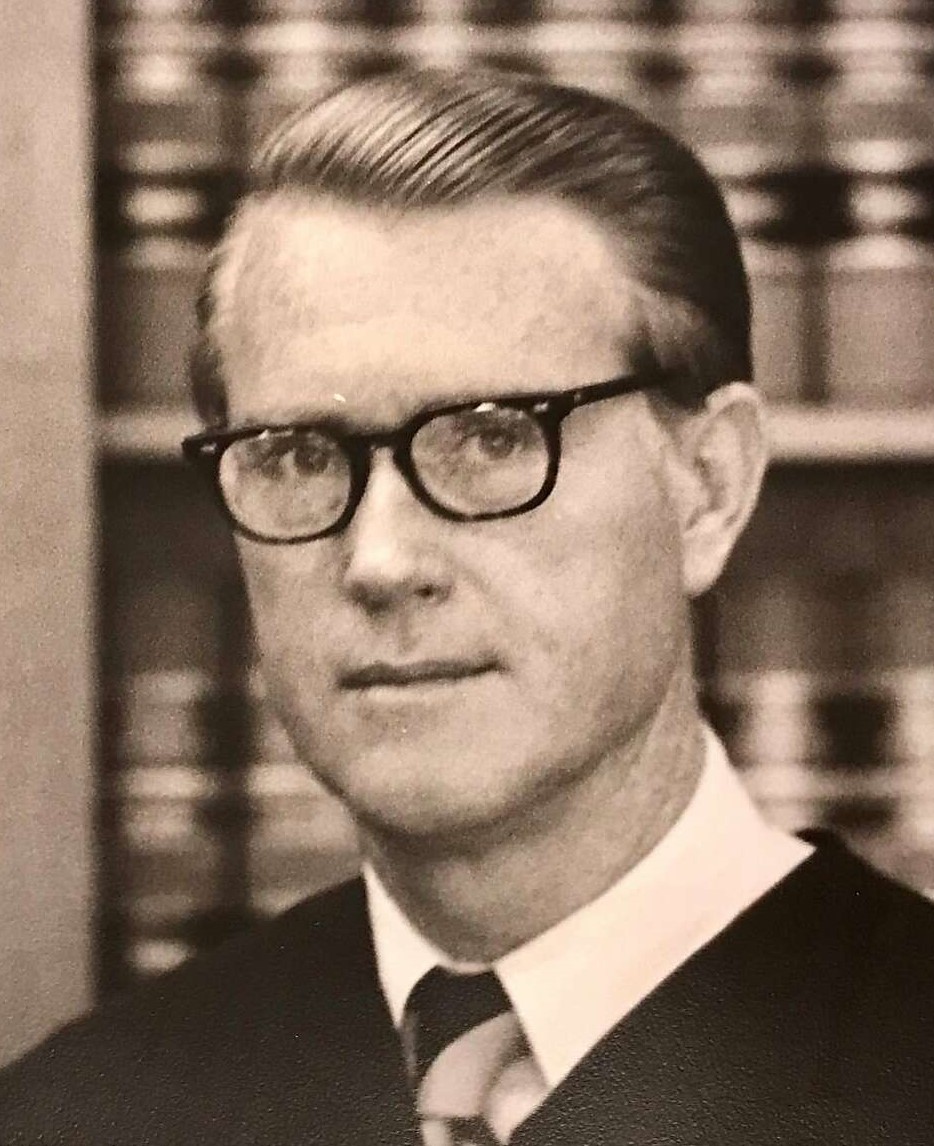
© 1981 Judge Charles Renfrew. All rights reserved.