
While the term ‘nostalgia’ derives from the Greek words nostos (return) and algos (pain) over the last three centuries the word has changed its meaning on a frequent basis.
The literal meaning of nostalgia, then, is the suffering evoked by the desire to return to one’s place of origin. When exploring new meanings of nostalgia based on research completed at the University of Sussex, (UK) the connection to memory becomes vital. Psychologists and historians have traced this relationship since the 18th century. Originally Johannes Hofer first proposed the term “nostalgia” in 1688 when he described the anxieties of Swiss mercenaries fighting away from home. They developed all types of medical symptoms but once they started their journey back to Switzerland they all seemed to recover remarkably fast.
In ancient Greece myths nostalgia is the essence of such stories of Odysseus and of Jason and the Argonauts. These myths show how the return home was a way to reconnect with one’s origins and reclaim identities. He is most famous for his “nostos”, or “homecoming”, which took him ten eventful years after the decade-long Trojan War.
On a personal note as we are all different there are many versions of our own understanding of nostalgia.
Here are two examples of mine: the first, based on growing up in Liverpool, (UK) is with vivid memories of the Beatles. One of their songs is a fine example of memory and nostalgia:
“There are places I’ll remember
All my life, though some have changed
Some forever, not for better
Some have gone and some remain
All these places have their moments
With lovers and friends I still can recall
Some are dead and some are living
In my life, I’ve loved them all.”
—The Beatle
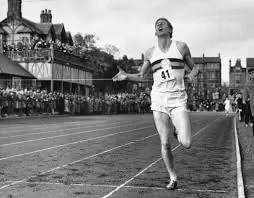
My second bias is a memory of the four-minute mile when we watched Roger Bannister on a black & white television set in 1954 complete this outstanding athletic achievement. Part of the importance was the medium —a television set—and secondly a great historic national moment, the breaking of a world record.
I was reminded of this in Vladimir Nabokov’s Speak Memory where he defined nostalgia as “a shade of the Russian word toska,…a sensation of spiritual anguish that can be without a specific cause.”
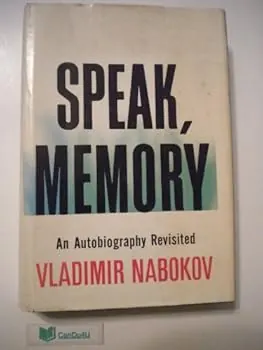
For Nabokov; “toska” can also be a dull ache, longing, or yearning. He continues, “The nostalgia I have been cherishing all these years is a hypertrophied sense of lost childhood, not sorrow for lost banknotes.” And finally: I reserve for myself the right to yearn after an ecological niche.”
While this paper explores nostalgia primarily through western and english meanings, it is worth mentioning the similarity found in other languages. For example, the Portuguese writer Manuel de Melo uses the word ‘a saudade’ meaning “a pleasure you suffer, an ailment you enjoy.”
In Chinese: a nostalgic retrospective implies a yearning for the past, recollecting the good old days, a feeling of pleasure and also slight sadness when you think about things that have previously happened.
For the Japanese the phrase mono no aware is epitomized in the blossoming of cherry trees. Closely related to mono no aware is wabi-sabi, an aesthetic of impermanence and imperfection that is rooted in Zen Buddhism. So nostalgia isn’t just some foolish whim. It is a life raft as a means of grounding ourselves in a world that promises constant change.
In German the word Sehnsucht is slightly different as it implies a dissatisfaction with an imperfect reality paired with the yearning for an ideal that comes to seem more real than the reality itself.
CS Lewis captures something of all these meanings:
“The books or the music in which we thought the beauty was located will betray us if we trust to them; it was not in them, it only came through them, and what came through them was longing. These things—the beauty, the memory of our own past—are good images of what we really desire; but if they are mistaken for the thing itself they turn into dumb idols, breaking the hearts of their worshippers.
For they are not the thing itself; they are only the scent of a flower we have not found, the echo of a tune we have not heard, news from a country we have not visited.”
In the literature of the American South Look Homeward, Angel by Tom Wolfe, and other writers, Flannery O’Connor and William Faulkner nostalgia plays a significant role.
“Even as a grown woman I was haunted always by homesickness,” writes Carson McCullers in Illumination and Night Glare.
These novels heavily infused with nostalgia, utilizes this concept but some contemporary authors critique the overly romanticized view of the South, highlighting the problematic aspects of nostalgia, particularly in relation to race.
By the mid-1960s satirists such as Tom Lehrer felt comfortable parodying these versions of the South in songs like “Take Me Back to Dixie.”
When it comes to nostalgia and the brain, take the gruesome case of Phineas Gage. This incident occurred in 1848 in the small town of Cavendish, Vermont.
He was a railroad construction foreman, blasting rock when a thirteen-pound iron rod was shot through his brain. Miraculously, he survived to live another eleven years and became a textbook case in brain science. Phineas Gage seemed to completely recover from his accident. But he was changed.
His case astonished doctors in his day and still fascinates doctors today. What happened and what didn’t happen inside the brain of Phineas Gage tells you a lot about how brains work, the nature of nostalgia, and how you can act human even with a personality disorder. Before the accident he had been a quiet, easygoing person and following it he became profane, disruptive, and argumentative. Doctors used him as a display piece and example in brain study lectures and medical schools.
Ironically, how nostalgia manifests itself is actually the town of Cavendish chosen by Solzhenitsyn as his place of residence when he came to this country. Cavendish reminded him of forested hillsides and harsh winters where he grew up while the privacy of its residents also reminded him of Russia.
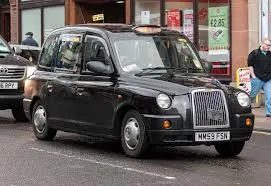
Another example of nostalgia and memory is in a study of London Cab Drivers who have to pass a test known as The Knowledge. This requires them to memorize approximately 25,000 streets within a specific radius of Charing Cross. They displayed increased gray matter volume found in their brains compared with those in a the control sector. The two brain regions neurologists associate with nostalgia are the right and the left hippocampi.
Nostalgia activates various brain regions linked to memory and reward, affecting people differently. While some view it as a way to connect socially and boost optimism, others see it as a sign of emotional instability.
Nostalgia tends to offer emotional, behavioral, and social benefits, including optimism, motivation, and creativity.
The taxi driver study conducted by Nobel prize winner Dr Maguire noted that a distributed set of brain regions supports human episodic (autobiographical) memory, defined as the memory for personal everyday events, and that this brain network overlaps considerably with that supporting navigation in large-scale space and other diverse cognitive functions such as imagination and thinking about the future.
This was supported by neurologist Oliver Sacks who viewed “nostalgia and creativity as coming from the same place in our sense of self. ..people only feel nostalgic about experiences that were incomplete or interrupted, and that the drive to repair or complete those interruptions is what leads to art and nostalgia. Sacks also said that nostalgia is a fantasy that never takes place.”
His notion of self-reflection, autobiographical memory processing, and emotion regulation, are key components of experiencing nostalgia in his book, The Man Who Mistook His Wife for a Hat is a good example of the type of confusion nostalgia can create.
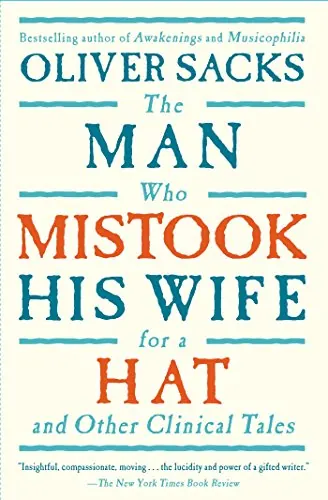
Sacks also tackles the remarkable mechanisms by which we fabricate memories, involuntarily blurring the line between the experienced and assimilated: Some of our most cherished memories may never have happened — or may have happened to someone else.
His valuable insights into the organization of memory systems in the brain emphasized the role of the hippocampus in episodic memory formation.
It has contributed significantly to our understanding of the brain’s memory processes and the distinction between different memory systems.
In 1989, when I was writing “Memory a Mixed Blessing” with Dr. Tom Butler, we conducted a survey at Oxford University— interviewing 200 married couples (all together for over 30 years)—and asked them separately where they met.
Example: One wife told me it was Logan Airport, Boston, the place was empty and he took the seat next to me.
Her husband told me it was Logan Airport, the place was crowded and the only seat available was next to her.
Both were telling the truth so this speaks to memory as an unreliable narrator. Sometimes flashes of nostalgia display the same symptom.
During my period of teaching in France the phrase “deja vu” also gave me a different understanding of memory and nostalgia.
What we think happens during déjà vu relies on an understanding of the organization of the brain.
There’s a part of the brain in the medial temporal lobe – the part of your brain that sits near your cheekbones and your ears – that is associated with laying down memories and giving you the feeling of remembering things.
Flaubert’s Madam Bovary and Maupassant’s Was it a dream? both explore the theme revolving around the exploration of perception versus reality.
With Bovary it may be that the main character is merely dreaming and that the woman did not constantly betray her husband. A third-person perspective on this narrative would bring objectivity, and allow readers to make accurate assessments and uniform interpretations. The author, however, deliberately chose to use first-person narration because emotions cannot be objective – each person feels them differently.
Autobiographical memories activated by the senses, particularly smell and taste, can be among the most potent and influential, labelled the Proust Effect. Contemporary research explains the physiological, neurological, and psychological reasons underlying this phenomenon.
These memories have an even more positive emotional profile than nostalgic memories elicited by other means, with individuals reporting lower levels of negative emotions.
Scent-evoked and food-evoked nostalgia confer numerous psychological benefits, including enhanced self-esteem, feelings of social connectedness, and deeper meaning in life. Marcel Proust in his classic Remembrance of Things Past highlighted both these senses of memory.
Based on my own experience researching an article on seances I wrote about the heightened sense of smell which is often reported as a phenomenon by many participants. This frequently led them to recall past experiences which could be interpreted as a sign of a spirit presence. So smell and memory proved a strong connection in the brain.
This connection appeared to trigger vivid emotional responses with the deceased. My conclusion was always skeptical even though people in the rooms seemed to be experiencing something real.
Nostalgia, in its many forms, has long been a major theme in myth and poetry; the Bible, Homer’s Odyssey and the literature of all ages. Shakespeare’s sonnet 30 is another prime example.
In the book Memory: A Mixed Blessing we included the poem “Digging” by Nobel prizewinner Seamus Heaney.
Digging
Between my finger and my thumb
The squat pen rests; snug as a gun.
Under my window, a clean rasping sound
When the spade sinks into gravelly ground:
My father, digging. I look down
Till his straining rump among the flowerbeds
Bends low, comes up twenty years away
Stooping in rhythm through potato drills
Where he was digging.
The coarse boot nestled on the lug, the shaft
Against the inside knee was levered firmly.
He rooted out tall tops, buried the bright edge deep
To scatter new potatoes that we picked,
Loving their cool hardness in our hands.
By God, the old man could handle a spade.
Just like his old man.
My grandfather cut more turf in a day
Than any other man on Toner’s bog.
Once I carried him milk in a bottle
Corked sloppily with paper. He straightened up
To drink it, then fell shoulder to right away
Nicking and slicing neatly, heaving sods
Over his, going down and down
For the good turf. Digging.
The cold smell of potato mould, the squelch and slap
Of soggy peat, the curt cuts of an edge
Through living roots awaken in my head.
But I’ve no spade to follow men like them.
Between my finger and my thumb
The squat pen rests.
I’ll dig with it”.
Another form of nostalgia relates to re-enactors who divide into different categories. The mainstreamers often don’t fit the traditional image of a young, thin soldier while the campaigners pride themselves on living rough and achieving authenticity. Some re-enactors pay close attention to the details of history, uniforms, and equipment.
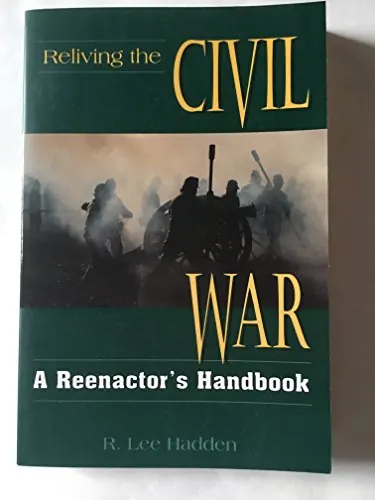
While many critics rightly blame battle reenactments for glorifying and trivializing war, others see reenacting as a means for responsibly educating. Some re-enactors promote the term “living history” to better describe their participation in recreated battles, camps, or museums. So nostalgia becomes literally living the past sometimes accurately and other times imaginatively.
When it comes to imagination, political campaigns are frequently able to relate nostalgia to a Golden Age when myths, romantic idylls, and images of a prelapsarian innocence. For example, people in the 14th century yearned for a golden age when everyone knew their place, prices were lower, and kings were better.
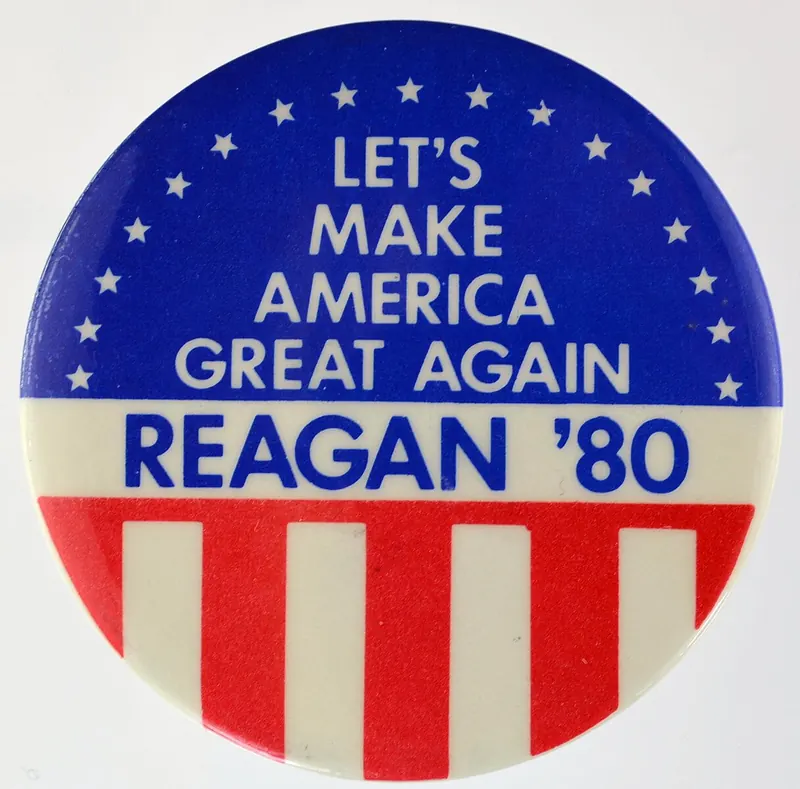

In 21st century America this has not really changed. With nostalgia bias, this psychological phenomenon means individuals view the past as better than the present.
Many find themselves reminiscing with a sense of longing, convinced that life was superior during earlier times. Others may view their past differently.
A significant contributor to nostalgia bias is the brain’s selective memory. Our minds often prioritize positive experiences while minimizing or forgetting negative ones. Consequently, the struggles fade into the background, leaving a blissful yet distorted recollection of our past.
In 2024, recent studies at the University of Sussex research often treated nostalgia as a way to overcome depression through prompted memories. However, nostalgia can be a double-edged sword:
If we try to look back at the past for events that make people feel nostalgic, they often think about positive things and that can lead to feelings of contentment and happiness.
However, nostalgia can be seen as a bittersweet when life events trigger a feeling about the past, that are not so positive. This can have a negative impact on our sense of well-being and for some can last for a few days.
Within philosophy, nostalgia is often examined as a complex emotion that can be understood as a reflection on the relationship between past, present, and identity. Some philosophers view it as a way to access deeper truths about oneself and the world through the lens of memory.
While others highlight its potential for distortion and idealization of the past; essentially, there is a “philosophy of nostalgia” that explores the meaning and implications of nostalgic feelings.

Buildings often evoke a sense of nostalgia, whether it is walking the streets of a historic city where you may have lived or sitting in a library of a university where one’s past studies took place. This often creates a deep sense of meaning, positive emotions, and even a sense of achievement—all creating a spirit of optimism. It links nostalgia to time, both time ‘present’ and time ‘past.’
In 2024 at Liverpool University experiments were conducted relating to odor and emotion. Scientists reported happy feelings after sniffing certain smells. The brain scans registered a reward system associated with nostalgia. This also proved true in relation to music.
Incidentally, the word “emotion” dates back to 1579. This word “emotion” like the word “scientist,” coined in 1834 by philosopher William Whewell were two of the words he frequently used.
On checking my Cambridge notes from a 1961 CS Lewis lecture, I noted, “Our lifelong nostalgia, our longing to be reunited with something in the universe from which we now feel cut off, to be on the inside of some door which we have always seen from the outside, is no mere neurotic fancy, but the truest index of our real situation.
And to be at last summoned inside would be both glory and honor beyond all our merits and also the healing of that old ache.”
Presentism
The American Historical Association has condemned what it calls “the tendency to interpret the past in presentist terms.” It argues that “presentism encourages a kind of moral complacency and self-congratulation. Interpreting the past in terms of present concerns usually leads us to find ourselves morally superior.”
It is vital that we come to terms with our history. But before we rush to condemn, we should work harder to understand.
Presentism in this sense is the inescapable tendency humans have to populate both the future and, to a lesser extent, the past with our immediate experiences and expectations. In our daily lives, all historians are presentists in this sense, however much in our professional capacities we might try to fend off the incursion of the present into our versions of the past.
Although historians are shaped by the moments in which we write, we first learn how to look at the world historically through the eyes of scholars shaped by an earlier moment.
Tensions in historical discourse must develop from this sliding contradiction. We can learn from this paradox if we allow it its own historical meaning, in which we are necessarily implicated politically. Doing so is not antithetical to learning from previous generations: it is how we do it.
As E.P. Thompson observed, historians “are as much subject to our own time’s formation and determinations as any others. If our work is continued by others, it will be continued differently.”
As a historian, I value research. But also the emotions, I’m keen on feelings, their variety, curious about their range and I take their power seriously.
Nostalgia could use a makeover – it needs rescuing from its associations with the sick, the stupid and the sentimental.
Nostalgia reflects changes in society from the postal service to Brexit and from imperial nostalgia, re enactors, statues removal that prompt different feelings to their meaning.
Today it is being studied philosophically from multiple points of view.. time, history, sociology and obviously a psychological perspective.
The decline of formal religious systems has left a moral and emotional emptiness in Western culture as George Steiner argued. Nostalgia has filled this gap.
Is past perfect the way some politicians strive to realize the future?
Russia today showed a warped perspective of the 2008 Russo-Georgian war and did so again during the Russian invasion of Ukraine.
In Russia today their archives have multiple examples of a tactical use of distorted headlines to promote extreme Russian nationalism. In a broadcast on February 25, 2022, days after Russia’s attack, one headline read: “Operation in Ukraine: Russia had no choice but to act in this way.” Another headline on RT read “Russia: National security threats left no choice but to start military operation.” So using a concept of nostalgia— the greatness of Russia’s past— became history blended with propaganda.
“So we beat on, boats against the current,
borne back ceaselessly into the past.”
Fitzgerald hypnotizes successive generations with Nick Carraway’s signing off after the death of Gatsby. It’s my favorite last line in the Anglo-American tradition – resonant, memorable and profound. It hovers between poetry and the vernacular and is the magnificent chord, in a minor key, which brings this 20th-century masterpiece to a close.
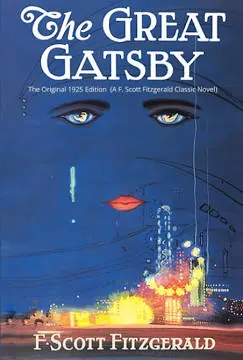
Somehow, it also sums up nostalgia, while giving the reader a way out into the drabber, duller world of everyday reality.
Bibliography
Speak Memory Vladimir Nabokov
The Man Who Mistook His Wife for a Hat Oliver Sacks
The Death of the Past J.H. Plumb
Selected Poems Seamus Heaney
A Civil War Handbook R. Lee Hadden
The Great Gatsby F. Scott Fitzgerald
Music and News Programs
BBC Roger Bannister—Four-Minute Mile
The Beatles There are places
Peter Robinson, a graduate of Cambridge University, is critic at largo for KALW 91.7 (local NPR station). He has taught at universities in the USA, UK, Europe, and Australia. He is author of The Insight Guide to Provence, and co-author with Sir Harold Mitchell of Caribbean Patterns.ter

© 2025 Peter Robinson. All rights reserved.